Sewer Line Repair and Inspection Expectations in Honolulu
Sewer line problems have a way of turning a normal week sideways. A slow drain can sit quietly for months, then become a backed-up fixture at the worst possible time. A damp area outdoors may seem minor until someone starts asking whether the issue reaches the building sewer. In Honolulu, the repair itself matters, but so does the process around it: who is allowed to do the work, whether a permit is required, how inspections fit in, and what a homeowner or property manager should verify before authorizing anything.
That is where expectations often get blurry. People search for a plumber near me, get a fast appointment, and assume the rest will sort itself out. Sometimes it does. Sometimes it does not. Sewer line repair is exactly the kind of job where process and workmanship are tied together. If the work requires a plumbing permit, Honolulu expects inspection for compliance. If the job crosses cost thresholds or requires permitting, Hawaii expects a licensed contractor. And if the work itself is plumbing work, the state is clear that licensed plumbers must perform the actual plumbing.

Those are not technicalities. They are the framework that shapes how a proper sewer line job should unfold.
Why sewer line work feels higher stakes in Honolulu
Any buried plumbing issue carries uncertainty. The challenge is not just finding the symptom, but confirming the scope before anyone starts cutting concrete, opening walls, or disturbing exterior areas. A homeowner may only know that drains are sluggish. A restaurant manager may notice recurring backups in a restroom line. A commercial property owner may be trying to distinguish between an isolated fixture problem and a larger drainage issue. In every case, sewer line repair sits in a category where mistakes can become expensive quickly.
In Honolulu, another layer matters: regulation. Plumbing work is not an informal trade where anyone with tools can legally handle all phases of the job. Hawaii regulates plumbing work through the Department of Commerce and Consumer Affairs. Consumers can verify a plumber’s license status, expiration date, and disciplinary history through the official license search tools. That means one of the most reasonable expectations is also one of the simplest: if someone is presenting themselves as a plumber Honolulu residents can trust, their license information should stand up to verification.
That expectation applies whether the caller is a homeowner, a condominium association, or a business looking for a commercial plumber. It also applies whether the problem is a sewer line issue, leak detection, drain cleaning, or water heater repair. The project type changes. The need to verify credentials does not.
The first expectation: licensed people doing licensed work
One of the biggest misunderstandings in the field is the difference between a company being in the plumbing business and a licensed plumber actually performing the plumbing work. Hawaii’s guidance is direct. Electrical and plumbing contractors must employ licensed electricians and plumbers to perform the actual electrical or plumbing work.
That matters during sewer line repair because these jobs can involve a chain of people: office staff, estimators, excavation crews, helpers, and licensed tradespeople. There is nothing unusual about that. What matters is that the actual plumbing work is performed by licensed plumbers. If a company is reputable, this should not be a touchy subject. Asking who will perform the work, and under what license, is not adversarial. It is basic diligence.
Consumers also tend to assume that if a truck is branded and the company shows up quickly, the legal side is handled. Sometimes that is true. Sometimes a fast response hides a weak paper trail. An emergency plumber can absolutely be legitimate and fully compliant, but urgency should never replace verification. Sewer line trouble creates pressure, and pressure is exactly when people skip the questions they later wish they had asked.
Permits are not optional when the job requires them
The next expectation is straightforward but often overlooked. Hawaii advises hiring a licensed contractor for projects over $1,500 in labor and materials, or for any project that needs a building, electrical, or plumbing permit. Sewer line repair can land in either category. Even when a customer does not yet know the final price, the nature of the repair may trigger permitting requirements on its own.
In Honolulu, the city’s plumbing code states that plumbing and drainage work authorized by permit is inspected for compliance. That is a key point. Inspection is not an optional add-on for peace of mind. It is part of the system when the work is permitted.
Homeowners sometimes hear the word permit and think only of delays, paperwork, and added cost. There is no point pretending permits are glamorous. They can add coordination. They can affect timeline. But for sewer line work, a permit and inspection process can also provide clarity. It establishes that the job is being performed within a regulated framework and that compliance is not left entirely to verbal assurances at the kitchen counter.

Honolulu’s permitting guidance also notes that permit valuation includes plumbing, heating, air conditioning, and other permanent work when calculating fees. The practical takeaway is that plumbing is squarely inside the city’s permitting structure. If someone tries to make a substantial sewer line project sound like a casual repair that exists outside of all permitting rules, that should raise questions.
What inspection usually means from a customer’s perspective
People hear the word inspection and imagine the city peering over every wrench turn. In practice, what matters most for the customer is understanding that an inspection is tied to permitted work and compliance with the applicable code. It is not a substitute for hiring carefully. It does not relieve the contractor of responsibility. It does, however, create an external checkpoint.
A sensible expectation is that the contractor should be able to explain whether the proposed sewer line repair requires a permit, who is pulling it, and how inspection fits into the schedule. If that conversation feels evasive, muddy, or defensive, pay attention. Clear operators tend to answer process questions clearly.
There is also a timing reality. Inspection can affect sequencing. Even without getting into project-specific details that vary case by case, customers should expect that some steps may need to line up with permit issuance and inspection milestones rather than pure convenience. That can feel frustrating when a property is already disrupted, but it is part of doing regulated plumbing work correctly.
What to verify before authorizing sewer line repair
The most useful questions are usually the least dramatic. They are not about catching anyone in a mistake. They are about confirming that the job is set up properly before money starts moving and surfaces start opening.
- Verify the plumber’s state license status, expiration date, and disciplinary history through Hawaii’s official license search tools.
- Ask whether the repair requires a plumbing permit and who will obtain it.
- Confirm that licensed plumbers, not just general labor, will perform the actual plumbing work.
- Request a written scope so you know whether you are authorizing inspection, repair, or both.
- If the job is large or clearly above modest repair level, ask how permit and inspection timing may affect the schedule.
That short list can prevent a surprising amount of confusion. It also creates a record of what was discussed. When expectations drift on sewer line projects, the source is often not bad intent. It is vagueness. A customer thinks they approved one thing, the contractor thinks they were authorized for another, and the paperwork lags behind both.
Honolulu property owners should expect a little paperwork, and that is healthy
A clean process rarely feels dramatic. It usually looks like names, license numbers, permit discussions, scope descriptions, and scheduling windows. Some customers want to get straight to the repair and avoid all of that. Experienced property owners usually come to the opposite view. They know that sewer line work is not where you want the lightest possible paper trail.
This is especially true for landlords, condominium boards, and commercial operators. If a business hires a commercial plumber to address a drainage issue, there may be internal approval layers, tenant communication, and insurance considerations beyond the plumbing itself. In those settings, written clarity is not bureaucracy for its own sake. It is what keeps everyone aligned.
The same logic applies to residential owners, even on a smaller scale. If you later need to explain what work was done, by whom, and under what permit conditions, it helps enormously if those basics were documented from the beginning.
The role of continuing competency, and why it matters quietly
Consumers do not always ask how plumbers keep current, but they should at least understand that the state treats competency as an ongoing matter. Hawaii’s current plumber renewal requirements call for licensed plumbers on active status to show proof of continuing competency in the 2021 Uniform Plumbing Code for the licensing period running from July 1, 2024 to June 30, 2027.
That may sound administrative, but it reflects something important. Codes are not static, and regulated trades are expected to keep up. For the customer, this is less about memorizing code references and more about recognizing that a properly licensed plumber Oahu residents hire is operating within a framework that includes ongoing competency requirements.
Contractor license renewal also follows a state cycle. The Department of Commerce and Consumer Affairs states that contractor licenses renew by September 30 of every even-numbered year, with the 2026 to 2028 on-time renewal window running from August 10, 2026 through September 30, 2026. For customers, that means license verification is not a one-time concept frozen in the past. Status and expiration are active details worth checking at the moment you hire.
Where sewer line concerns overlap with other plumbing services
Real service calls are not always tidy categories. A homeowner may call for drain cleaning, only to learn the problem extends farther than a fixture branch. A property manager may suspect a hidden plumbing issue and ask for leak detection before deciding whether the sewer line is even involved. A business may book a general plumber near me search result and later realize the work belongs with a team equipped for larger commercial demands.
That overlap is normal. What should remain consistent is the standard for who performs the work and how the job is handled if it becomes a permitted repair.
This is also why customers should be cautious about one-size-fits-all sales language. Sewer line repair is not interchangeable with water heater repair, even though the same company may legally and competently handle both. The administrative expectations may differ. The permit implications may differ. The inspection path may differ. Good contractors explain those distinctions without making the customer feel foolish for asking.
A note on emergencies and fast decisions
Sewer line trouble does not always wait for normal business hours. Backups, active leaks, and sanitation concerns can create genuine urgency. Searching for an emergency plumber in that moment is understandable. The pressure is real, and speed matters.
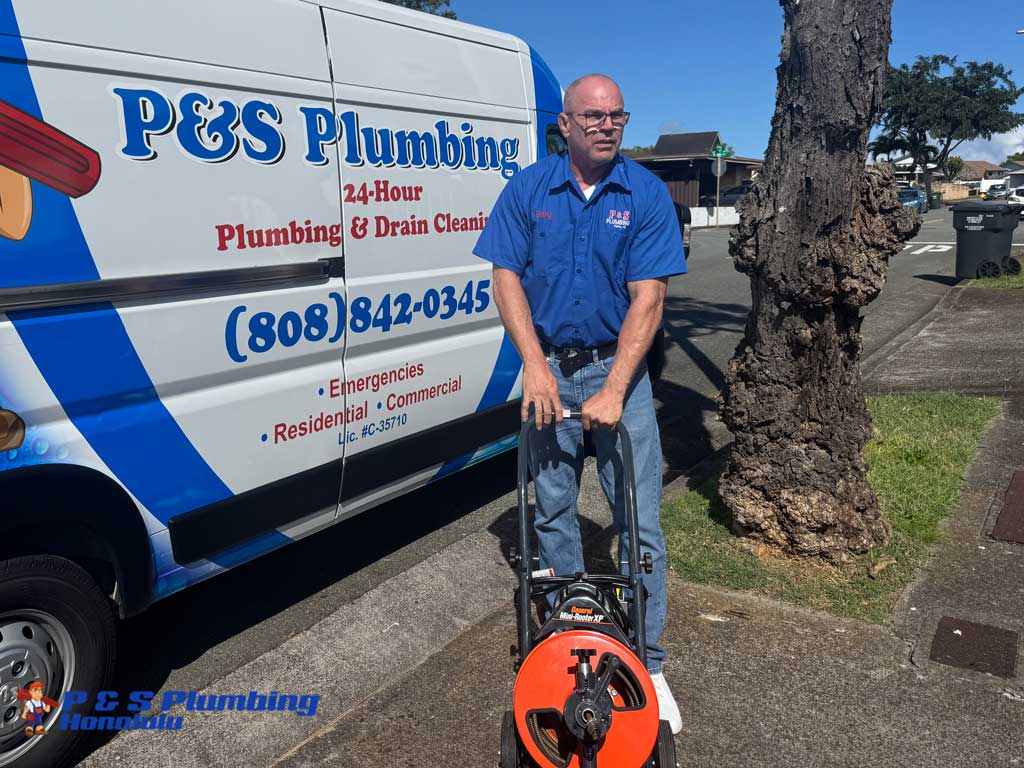
Still, urgency should narrow your focus, not erase it. The goal in an emergency is to make the best fast decision available. That usually means confirming licensing first, then clarifying whether the visit is for immediate stabilization, diagnostic work, or full repair authorization. If the issue appears likely to involve permitted sewer line repair, ask how that next step will be handled once the immediate emergency is under control.
I have seen property owners feel cornered into approving broad work because the first call happened under stress. A more disciplined approach is often better. Authorize what is necessary to make the situation safe and manageable, then require a clear explanation of repair scope, permit needs, and inspection expectations before moving further.
That is not a sign of mistrust. It is sound judgment when the stakes are high.
Practical warning signs that deserve a second look
Most plumbing companies are not trying to confuse customers. Even so, certain patterns deserve attention. If someone discourages you from checking license status, that is a problem. If there is no clear answer about whether a permit is needed, that is a problem. If the explanation of who will perform the plumbing work shifts depending on who answers the phone, that is a problem.
A second opinion is not always necessary, but it can be useful when the process feels inconsistent. Sewer line work often starts with uncertainty, so some fluidity in early discussions is normal. The line is crossed when uncertainty turns into avoidable vagueness.
Here are a few questions worth asking if the process starts to feel slippery:
- Is the person doing the plumbing work a licensed plumber?
- Does this repair require a plumbing permit in Honolulu?
- Will the permitted work be inspected for compliance?
- Can you provide the license information I should verify?
- Is this authorization for diagnosis only, or for full sewer line repair?
Those questions are simple, but they tend to cut through a lot of noise.
Expectations for homeowners versus commercial owners
The legal principles are the same, but the experience can feel different depending on the property. A homeowner usually wants disruption minimized, communication kept plain, and the process moved along without surprises. A commercial owner or manager may have larger operational concerns, including tenant impact, access timing, and internal documentation. In both settings, the best sewer line repair process tends to be the one that states early what is known, what is not yet known, and what administrative steps are required if the job moves into permitted work.
Commercial clients often have a sharper instinct for this because they deal with trades more often. They know that “we’ll figure out the permit later” is not a reassuring sentence. Residential owners sometimes need to borrow that same discipline. Sewer line trouble at a house feels personal and disruptive, but the remedy still lives inside the same licensing and permitting framework.
The value of broad plumbing awareness
Even though this article centers on sewer line repair, many of the same habits protect customers across the board. The homeowner who verifies a plumber Honolulu company’s license before approving a sewer repair should do the same when scheduling water heater repair. The business that checks licensing for a commercial plumber should keep that standard when arranging drain cleaning. The property owner thinking about leak detection should understand that regulated plumbing work remains regulated plumbing work.
There is also a practical maintenance angle. The Environmental Protection Agency notes that leak-detection and flow-monitoring devices can help reduce water waste, and it recommends https://deanyaxu179.rivertonbrief.com/posts/plumber-honolulu-and-the-value-of-permit-inspections-2 regular inspection of water heaters for leaks, loose connections, corrosion, and similar issues. That guidance is not sewer-specific, but it speaks to a useful mindset: plumbing systems reward attention before failures become disruptive. Sewer line problems are rarely convenient, and anything that improves a property owner’s overall awareness of the plumbing system tends to help.
What a well-run sewer line repair process usually feels like
It feels calm, even when the problem itself is not. The company identifies who they are. License information can be verified. The distinction between diagnosis and repair is explained. Permit needs are addressed directly. If permitted plumbing work is involved, inspection for compliance is part of the conversation, not an afterthought. The customer understands who is doing the actual plumbing work and what approvals are needed before the project advances.
That kind of experience is not about polished marketing. It is about alignment between legal requirements and day-to-day practice.
For Honolulu owners, the strongest expectation is not that every sewer line issue will be simple. Many are not. The strongest expectation is that the people handling the job respect the state and city framework that governs plumbing work. When that happens, even a stressful repair starts from firmer ground.